
Laser Filtration PCR Recycling is becoming an essential technology for processing highly contaminated post-consumer plastic waste. As global demand for recycled materials grows, recyclers must manage complex PCR streams containing food residue, labels, metals, and degraded polymers.
Post-consumer recycling (PCR) has become a cornerstone of the global push toward a circular plastics economy. However, recycling post-consumer waste is rarely straightforward. Real-world PCR streams, whether from household packaging, agricultural films, or mixed-source collections, often arrive laden with contaminants: food residue, paper labels, metal particles, adhesives, pigments, and degraded polymer chains. For recyclers, managing these contamination levels while maintaining acceptable output quality remains one of the most persistent engineering challenges in the industry.
Laser filtration PCR recycling has emerged as a transformative answer to this problem. Understanding how it works and what demands from downstream filtration and pelletizing components is essential for any recycling operation that is serious about performance.
Post-consumer recycling (PCR) has become a cornerstone of the global push toward a circular plastics economy. Organizations like PlasticsEurope highlight the importance of advanced recycling technologies to improve material recovery and sustainability.
Laser Filtration PCR Recycling: The Challenge of Highly Contaminated PCR Streams
Not all post-consumer recyclates is the same. Low-contamination PCR from clean collection programs is manageable with conventional melt filtration. High-contamination streams, however, present a very different picture. These materials commonly contain:
- Non-meltable particles such as metal fragments, glass, silica, and crosslinked polymers
- Organic residues that carbonize under processing heat
- Multi-layer or multi-material structures that resist uniform melting
- High moisture levels that compromise melt integrity
Standard screen changers and hydraulic filtration systems often struggle at these contamination levels, leading to frequent screen/mesh changes, higher scrap rates, and pressure instability in the extruder. The result is increased downtime and reduced profitability, two outcomes no recycler can afford.
How Laser Filtration PCR Recycling Works
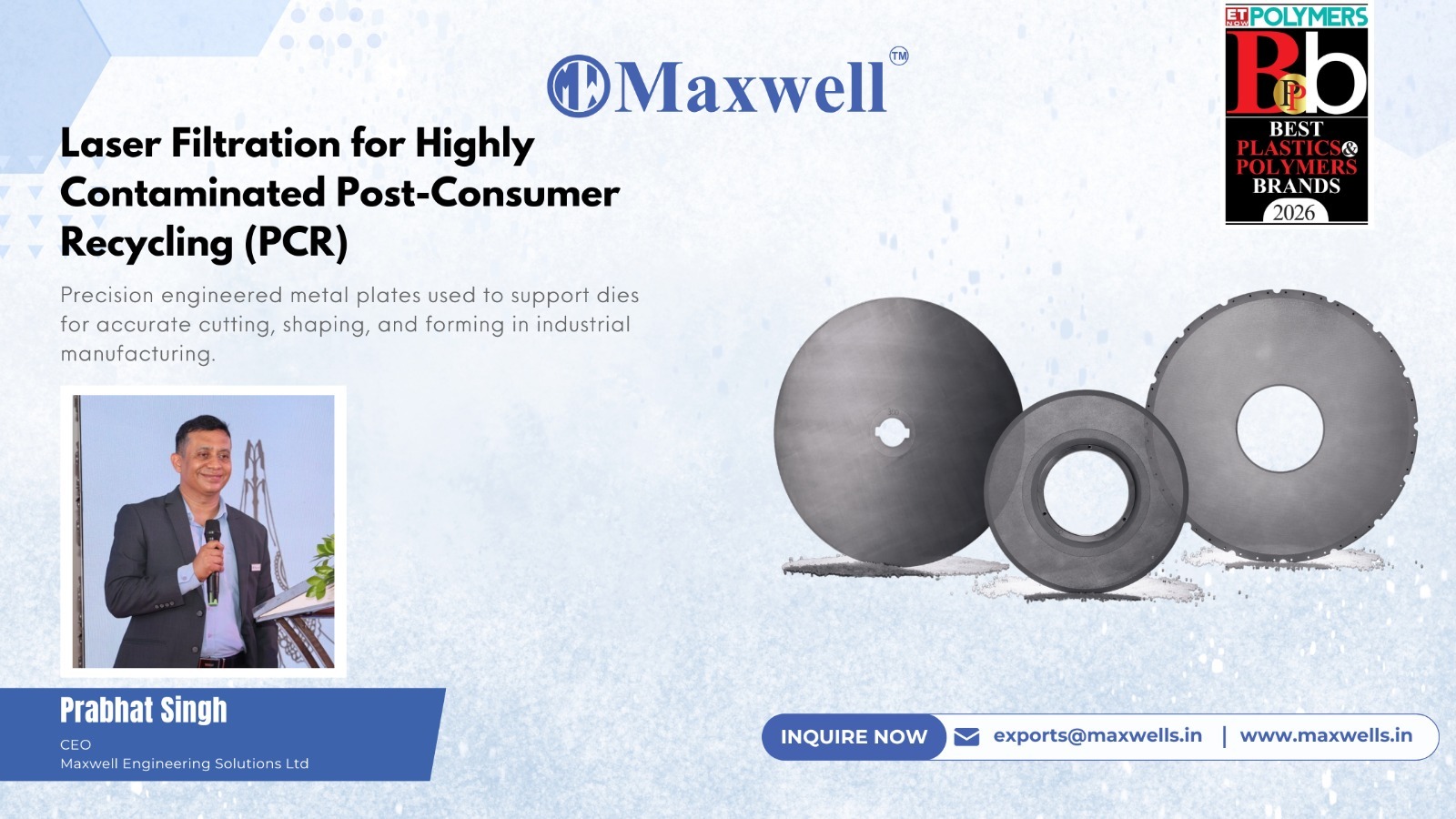
A rotating component in laser filters contains small, precise openings created using lasers (tiny ͏holes). Openings of 50 to 300 microns are typically found, varying based on their applications. Melted contaminants do not pass through, while larger materials remain trapped. A system manages to remove the stuck material continuously. Stopping operations is not something that occurs during the cleaning. The cleaning process operates efficiently and reduces interruptions.
In cases of excessive dirt, laser filters prove effective (cleaning tool). A considerable amount of dirt can be removed using laser filters. However, laser filters are not suitable for every situation.
Continuous operation: Unlike conventional screen changers, laser filters do not require line stoppages for screen replacement. This makes them ideal for contaminated streams where clogging would otherwise be frequent.
Consistent filtration fineness: Laser-drilled holes maintain precise, uniform dimensions over time, delivering repeatable filtration quality across every production run.
Reduced melt loss: Automatic backflush or disc rotation mechanisms discard contaminants efficiently while retaining good melt, an important consideration when processing valuable recycled material.
Pressure stability: Continuously removing blockages, laser filtration, and PCR recycling, the melt pressure profile protects extruder and die components from stress fluctuations that cause premature wear.
Impact of Laser Filtration PCR Recycling on Pelletizing Components
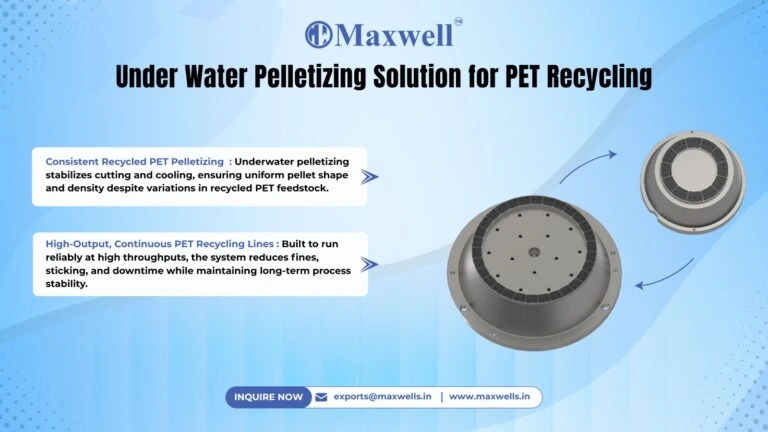
Attention is heavily placed on the filter (essential component). The quality of the material produced is determined by the pellets created from it. Effective performance is required from die plates, blades, and blade holders regardless of the stress, color variations, or slight contaminants found in recycled materials.
When handling soiled substances, a die plate is vital for securing acceptable outcomes (key part). Defective holes in the plate lead to uneven strands, odd pellet shapes, and surface complications. Lacking high-quality recycled materials reduces their worth. Quality die plates featuring properly sized holes allow challenging melts to emerge cleanly and be cut effectively. Efficient construction is often overlooked, yet essential in achieving clean results. Hard-to-recycle materials do not always yield optimal outcomes without careful attention to design. Selecting the right die plate is crucial for maximizing effectiveness.
Sharpness and appropriate sizing of the blades are essential (sharpness). Different types of recycled melted materials are to be cut effectively. Blades may not remain suitable if not properly maintained. Blade holders with rigid and consistent clamping geometry contribute directly to uniform cut quality and reduced angel hair formation.
Choosing the Right Components for Laser Filtration PCR Recycling Lines
When specifying or upgrading a PCR laser filtration line, recyclers should evaluate their pelletizing components with the same rigor as the filtration unit itself. Key considerations include the following:
- Die plate material grade: High-wear tool steels with appropriate surface treatments extend service life in abrasive PCR environments.
- Hole geometry and finish: Simulation-driven design of die hole profiles minimizes flow resistance and prevents material hang-up at the die face.
- Blade and holder compatibility: Correct blade geometry, matched to the die plate surface, ensures clean cuts and minimizes fines generation.
- Refurbishment options: Quality die plate refurbishment can restore worn components to original specifications, extending asset life and reducing replacement costs, particularly important for recycling operators working on tight margins.
Maxwell Engineering Solutions Limited manufactures and supplies precision die plates, pelletizing blades, and blade holders engineered for underwater pelletizing/water-ring pelletizers and extrusion systems. With over two decades of consolidated experience and clients across 50+ countries, Maxwell supports recycling operators in optimizing pelletizing line performance from first installation through component refurbishment and re-engineering, and also delivers laser filter discs, scrapper, scrapper blade holders, scrapper shaft, cutter compactor/densifier blades too.
Conclusion:
Laser filtration is a proven technology for processing highly contaminated PCR streams into viable production-grade material. Realizing its full potential, however, depends on pairing it with equally capable downstream components. By investing in precision-manufactured die plates, blades, and holders designed for the demands of recycled melt, recyclers can achieve consistent pellet quality, lower scrap rates, and a stronger return on their filtration investment.
To learn more about Maxwell’s range of die plates and pelletizing components for recycling applications, visit maxwells.in.